☕ The Cuban Ritual
You don't ask a Cuban if they want coffee. You ask how many sugars. Coffee is not a choice — it's the first thing offered to any guest. It means you are welcome. You are family.
The Culture
You don't ask a Cuban if they want coffee. You ask how many sugars. Coffee is not optional in a Cuban home — it's the first thing offered to any guest, the signal that you are welcome, that you are family. A Cuban who doesn't offer you a cafecito within five minutes of your arrival hasn't fully let you in the door yet.
Cuba grew coffee as far back as the 18th century, when French colonists fleeing the Haitian Revolution brought coffee cultivation with them. At its height, Cuba was one of the world's major coffee exporters. Today, production is more modest, but the culture surrounding coffee has only deepened — shaped by scarcity, by ritual, and by the unshakeable conviction that this small cup of sweetened espresso is one of life's non-negotiable pleasures.
"The espuma is everything. If there's no foam, you didn't make café cubano — you made espresso. Good espresso, maybe. But not the same thing."
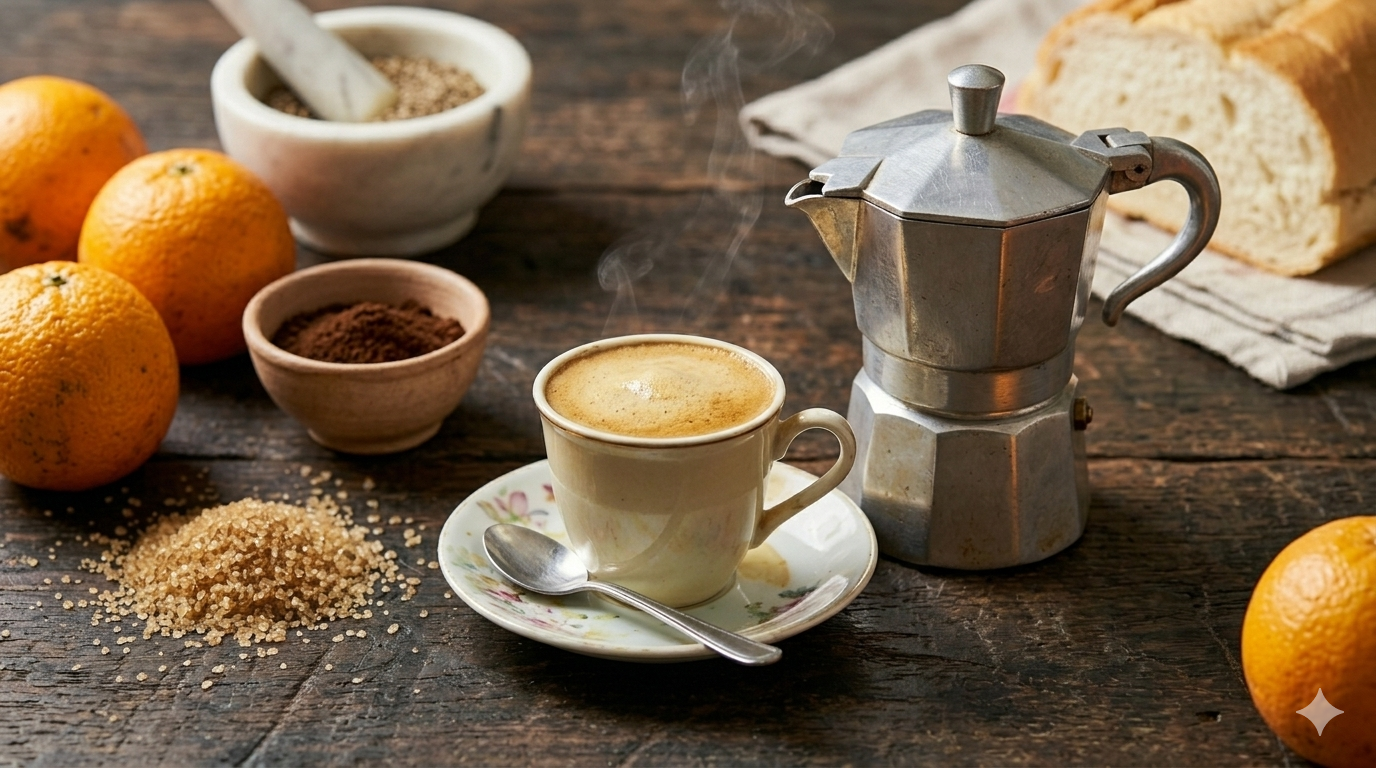
Cuban coffee is distinguished primarily by the espuma — a golden, sweet foam created by whipping the first drops of espresso into raw sugar until the mixture becomes a thick, caramel-colored paste. When the rest of the espresso is poured over it, the espuma rises to the top like a crown. It is the signature of a properly made cafecito, and the mark of someone who knows what they're doing.
The coffee itself is dark roasted, finely ground, and pulled strong. There are no half-measures. Strength is a value, sweetness is a given, and size is irrelevant — the cup is small, the impact is enormous.
Six Essential Styles
From the foundational cafecito to the communal colada, each style has its moment, its purpose, and its loyal devotees. Know them all.
01 · The Foundation
Also called: Cafecito
The café cubano is where everything begins. A small cup of espresso, shot directly over raw sugar, with the espuma — the signature golden foam — floated on top. This is the foundation of Cuban coffee culture, the drink from which all others derive, the flavor against which all others are measured.
The technique is specific: before you begin brewing, place 1–2 teaspoons of raw cane sugar (not refined white sugar — that's a different animal) into a small cup. As the first few drops of espresso emerge from the machine, pour them directly onto the sugar and whip vigorously with a spoon until the mixture transforms into a thick, pale gold paste. This is the espuma. When the espresso finishes brewing, pour it over the espuma and stir gently. The foam rises. The drink is ready.
It is served in a demitasse cup. It is consumed in two or three sips. It is had multiple times daily. It is, in every sense, a Cuban institution.
02 · Morning Balance
The gentle entry
A cortadito is a café cubano "cut" with a splash of warm steamed milk — roughly equal parts espresso and milk, though many Cubans lean heavier on the coffee. It's the drink you reach for when a straight cafecito feels like too much of an introduction to the day, but café con leche feels too timid.
The sweetness of the espuma carries through the milk, softening the bitterness while keeping the coffee's intensity intact. It's a perfect morning drink — strong enough to wake you up, gentle enough not to alarm you.
03 · The Breakfast Coffee
Cuba's breakfast table anchor
Equal parts strong Cuban coffee and steamed milk, the café con leche is the coffee of breakfast, the coffee of children, the coffee of slow Sunday mornings and conversations that last longer than they should. It's poured into a large cup or glass, accompanied by tostada — Cuban toast buttered generously and cut into dipping strips.
The tostada goes into the café con leche. This is not optional. It is how breakfast has been done in Cuban homes for generations, and it is correct. Don't question it. Just dip.
04 · The Communal Ritual
4–6 shots. One cup. Everyone drinks.
The colada is not a drink — it's a social act. A large styrofoam cup filled with 4–6 shots of café cubano arrives with a stack of tiny plastic cups (tacitas) beside it. You pour. You share. You talk. The coffee is the excuse; the conversation is the point.
On Miami's Calle Ocho, you can still order a colada from the ventanita — the walk-up window — and watch office workers, construction crews, and grandmothers all conduct their morning rituals this way. In Havana, the same ritual plays out on every street corner. The colada is Cuba's original coffee shop culture, no table required.
05 · Old School
Stovetop, cinnamon, patience
Before the espresso machine, there was the pot. Café de olla is brewed the old-fashioned way — coffee grounds simmered in water with a cinnamon stick and raw sugar in a traditional clay pot or regular saucepan, then strained into a cup. The result is smoother and less intense than espresso-based coffee, with a warmth and spice that feels like something your grandmother made.
It's less common in modern Cuban homes but still made by those who prize tradition above convenience. Some insist it's the only "real" Cuban coffee. They are not entirely wrong.
06 · The Summer Fix
Cold, sweet, intense
Iced Cuban coffee. Simple concept, extraordinary result. Make a café cubano with the espuma, let it cool briefly, then pour directly over ice. The sweetness prevents it from tasting watered-down as the ice melts. It's cold, intensely flavored, and devastatingly effective in the Cuban heat.
Some add a splash of whole milk for a Cuban-style iced latte. Others add a scoop of vanilla ice cream for café con leche helado — an entirely different and excellent thing. Either way, the espuma comes first. The espuma always comes first.
Step by Step
You need: a Moka pot (or espresso machine), raw cane sugar, and Cuban-roast dark coffee grounds. That's it. Here's the process, without shortcuts.
The Trusted Three
All three are widely available in the United States. All three are excellent. Pick one and become loyal to it — Cuban coffee culture rewards consistency.
Rich · Traditional · Florida's Favorite
Founded in Cuba in 1865, Pilon is one of the oldest and most beloved Cuban coffee brands. Its dark roast is rich, full-bodied, and perfectly balanced for making café cubano — not too bitter, not too light, with just enough sweetness in the bean. A staple in every Miami Cuban household.
Bold · Widely Available · New York Icon
Bustelo was founded by Cuban-born Gregorio Bustelo in 1928 in New York City, where he sold coffee to the city's growing Cuban and Puerto Rican community. It's the most widely distributed Cuban-style coffee in America — rich, dark, intense, and unmistakably correct for café cubano. The yellow can is iconic for a reason.
Smooth · Aromatic · The Connoisseur's Choice
La Llave — "The Key" — is less famous than Pilon or Bustelo but fiercely beloved by those who know it. Its dark roast is slightly smoother and more aromatic than its competitors, with a deep chocolate note that makes extraordinary espuma. For many Cuban coffee traditionalists, La Llave is the definitive answer.
The Diaspora Connection
Two cities. One ritual. The same cup of sweetened espresso connects them across 90 miles of water and 60 years of history.
In Havana, coffee is brewed in a Moka pot on a gas stove, poured into a small enamel cup, and drunk at the kitchen counter before the day begins. It's shared with whoever is in the room. It is a moment of stillness in a city that is constantly moving, constantly improvising.
Street corners throughout Old Havana have small state-run coffee stands where cafecitos are sold for a few centavos. The cups are small. The lines are long. The ritual is unchanged from fifty years ago.
In Miami's Little Havana, the coffee culture arrived with the first wave of Cuban exiles in the 1960s and never left. The ventanita — the walk-up window — became a Cuban-American institution. You order a café cubano, a cortadito, or a colada. You pay $2. You stand on the sidewalk and drink it. You talk to whoever is next to you. It's the great equalizer.
Calle Ocho is lined with Cuban cafeterias and ventanitas that have been serving the same drinks, from the same recipes, for decades. The espuma is still made the same way. The sugar is still raw. The cup is still small.