The Soul of Cuban Cooking

Cuban food is not complicated food. It is patient food. It is food that begins with the sofrito — the fragrant base of onions, green peppers, garlic, and tomato cooked slowly in olive oil — and builds from there in layers of flavor that no shortcut can replicate. This is not a cuisine of secret spices or rare techniques. It is a cuisine of time, of love, and of an island that learned to cook with what it had.

The building blocks are simple and sacred: naranja agria (sour orange) for brightness, cumin and oregano for depth, sofrito for foundation. Pork is king. Beans — black or red — are never optional. Rice is always present. And somewhere, always, there is a plantain frying in a pan, filling the house with a smell that means one thing: you are home.

These ten recipes are the ones Cuban families have cooked for generations. They are Sunday afternoon lechón, weeknight picadillo, the dessert abuelas make without measuring. They belong to everyone who has ever sat at a Cuban table. Cook them slowly. Cook them with care. And understand that every dish is not just a recipe — it is a story carried across the water. Once you've mastered these at home, taste them where they truly belong — at Havana's finest private restaurants.

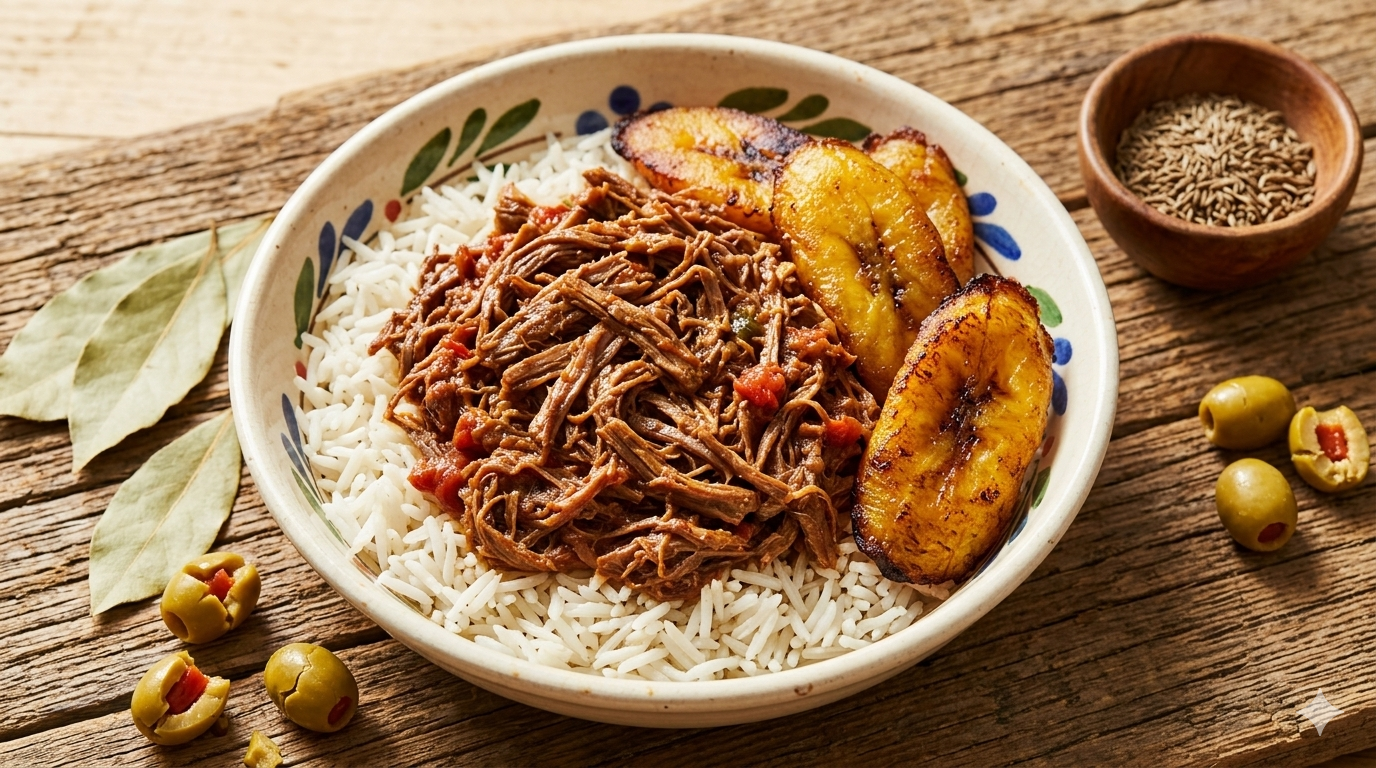
Ropa vieja — shredded beef with peppers and sofrito, Cuba's national dish

Recipe No. 1

Ropa Vieja

The national dish of Cuba. Ropa vieja means "old clothes" in Spanish — the beef shreds like fabric, pulling apart in the sofrito until it's almost unrecognizable. And then it's perfect. Braised flank steak in a rich tomato-based sofrito with peppers, wine, and spices. This is the dish that made Cuban food famous.

Prep Time

20 min

Cook Time

2.5 hrs

Serves

6

Difficulty

Medium

Ingredients

  • 2 lbs flank steak
  • 1 can (28 oz) crushed tomatoes
  • 1 large green bell pepper, diced
  • 1 large onion, diced
  • 6 garlic cloves, minced
  • 1 tsp ground cumin
  • 1 tsp dried oregano
  • 1 bay leaf
  • ½ cup dry white wine
  • ¼ cup extra-virgin olive oil
  • Salt and black pepper to taste
  • Fresh cilantro, for serving
  • 1 roasted red pepper, sliced (optional)
  • 1 tsp paprika

Instructions

  1. 1

    Boil the beef: Place the flank steak in a large pot and cover with cold water. Add a pinch of salt, half the onion, and 2 garlic cloves. Bring to a boil, then reduce heat to a low simmer. Cover and cook for 1.5 to 2 hours, until the beef is completely tender and starting to fall apart.

  2. 2

    Shred: Remove the beef from the broth and let it cool slightly. Reserve 1 cup of the cooking broth. Using two forks (or your hands once cool), shred the beef into long, thin strands — like the fabric that gives the dish its name. Set aside.

  3. 3

    Make the sofrito: In a large, deep skillet or Dutch oven, heat the olive oil over medium heat. Add the remaining diced onion and green bell pepper. Cook, stirring occasionally, for 8–10 minutes until soft and golden at the edges. Add the minced garlic and cook another 2 minutes until fragrant.

  4. 4

    Build the sauce: Add the crushed tomatoes, cumin, oregano, paprika, and bay leaf to the sofrito. Pour in the white wine and the reserved cup of beef broth. Stir everything together and bring to a gentle simmer. Cook uncovered for 10 minutes, letting the sauce deepen and concentrate.

  5. 5

    Fold in the beef: Add the shredded beef to the sauce and stir gently to combine. The beef should be fully coated in the rich sofrito. Add the roasted pepper slices if using. Season generously with salt and black pepper.

  6. 6

    Simmer and serve: Reduce heat to low and simmer for 20–25 minutes, stirring occasionally, until the sauce has thickened and the beef has absorbed all the flavors. Remove the bay leaf. Scatter fresh cilantro over the top. Serve over white rice with black beans and tostones on the side.

👨‍🍳

Chef's Tip

"The trick is patience. Low and slow is the Cuban way. Don't rush the sofrito — let it caramelize properly. And don't shred the beef too fine; you want real texture, not mush. Ropa vieja tastes even better the next day after the flavors have had time to marry."
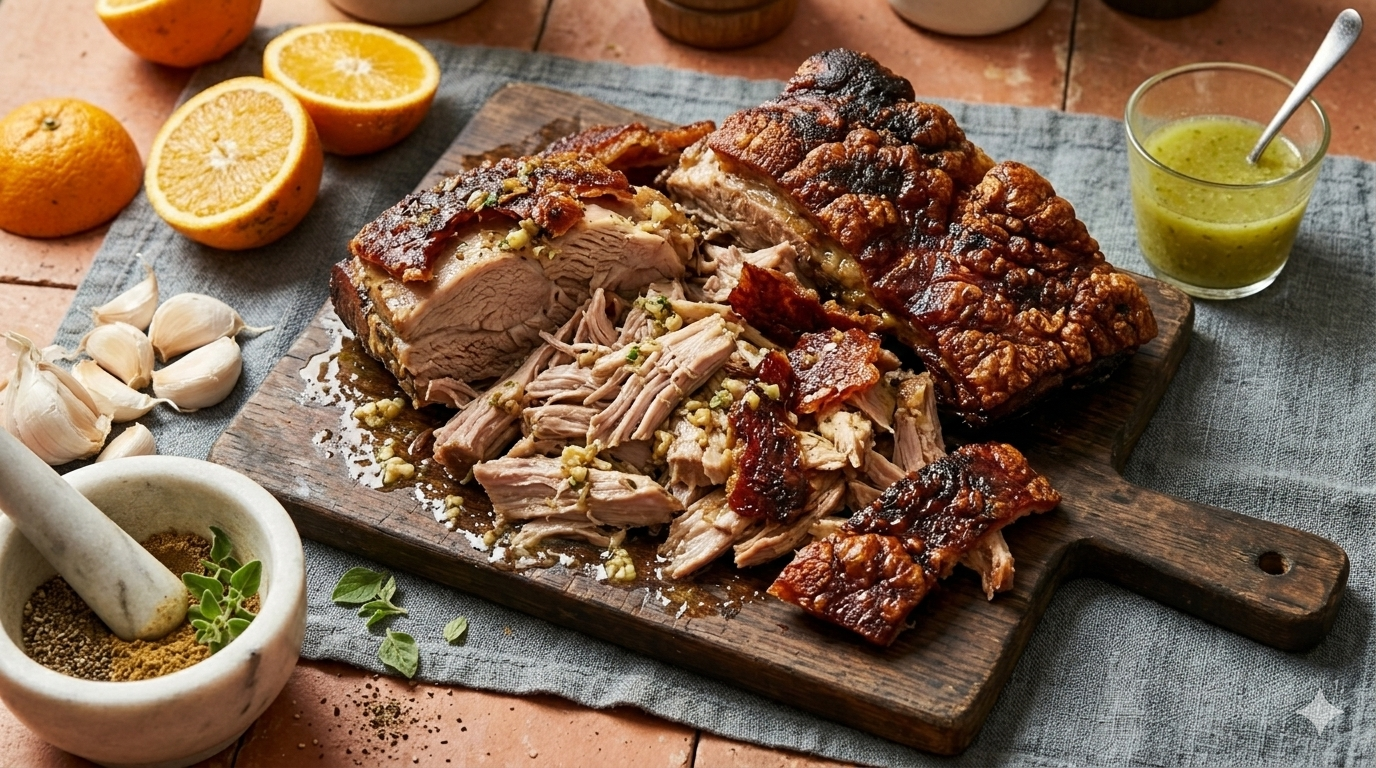
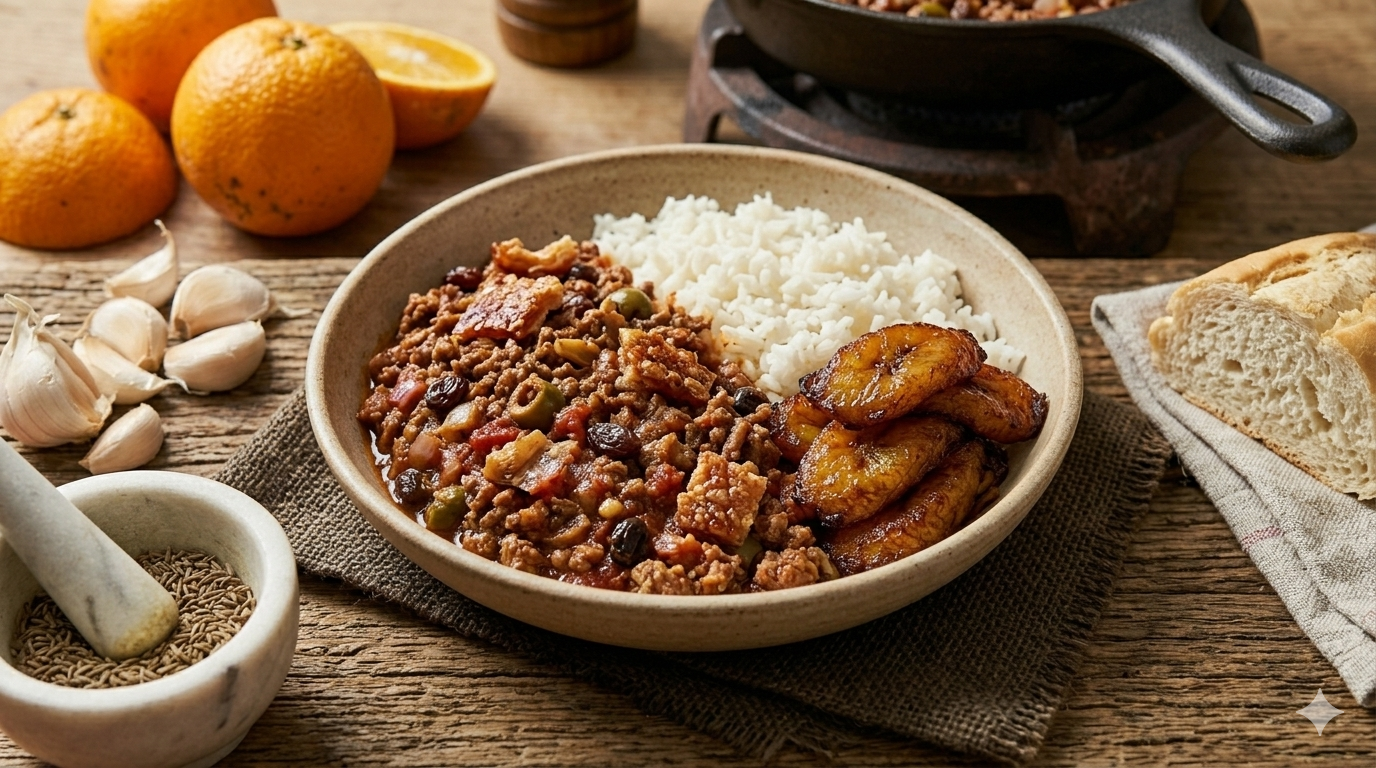
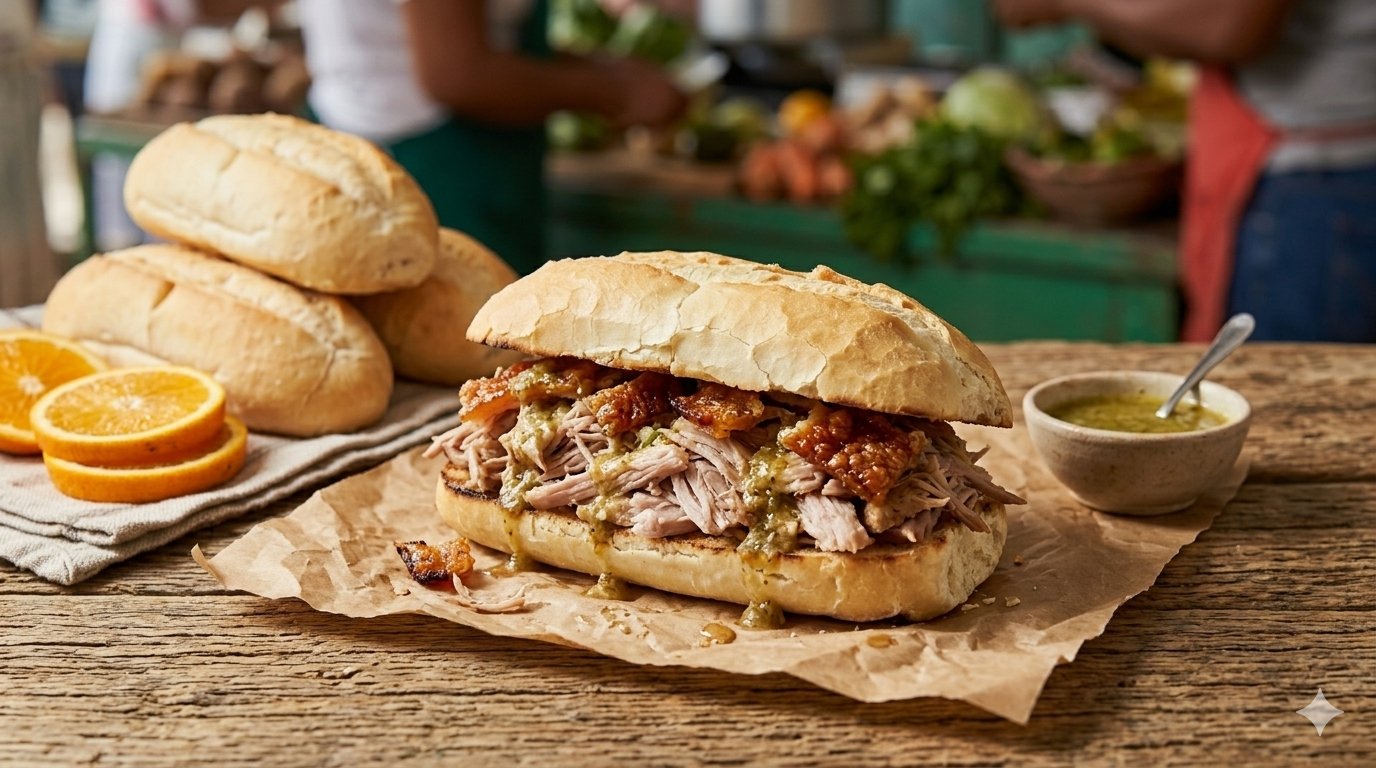
Lechón asado — Cuban slow-roasted whole pig

Recipe No. 2

Lechón Asado

Sunday family ritual. Slow-roasted pork shoulder bathed in mojo — a potent sauce of naranja agria, garlic, cumin, and oregano that perfumes the whole house and half the neighborhood. This is the centerpiece of Cuban feasting, the dish that holds families together and marks celebrations. It takes time. It is worth every minute.

Prep Time

24 hrs

Cook Time

4 hrs

Serves

10

Difficulty

Easy

Ingredients

  • 5 lb pork shoulder (bone-in preferred)
  • 1 cup naranja agria (sour orange juice)
  • 10 garlic cloves
  • 1 tsp ground cumin
  • 1 tsp dried oregano
  • ½ cup extra-virgin olive oil
  • 2 tsp kosher salt
  • 1 tsp black pepper
  • 1 tbsp achiote (annatto) paste
  • 1 large onion, sliced into rings
  • 2 tbsp fresh lime juice
  • 1 tsp crushed red pepper (optional)

Instructions

  1. 1

    Make the mojo marinade: In a mortar and pestle (or food processor), crush the garlic cloves with 1 tsp salt until a smooth paste forms. Combine with naranja agria, olive oil, cumin, oregano, black pepper, achiote paste, and lime juice. Whisk vigorously until emulsified.

  2. 2

    Score and inject the pork: Using a sharp knife, make deep cuts all over the pork shoulder — 1 inch deep, every 2 inches. Push garlic paste into the cuts with your fingers. Pour the remaining mojo over the pork, massaging it into every crevice. Cover and refrigerate for a minimum of 12 hours, ideally 24.

  3. 3

    Bring to room temperature: Remove the pork from the refrigerator 1 hour before roasting. Preheat oven to 325°F (160°C). Place the pork fat-side up in a large roasting pan. Scatter the onion rings around it. Pour any remaining marinade over the top.

  4. 4

    Roast low and slow: Cover tightly with aluminum foil and roast for 3 hours. Remove the foil and increase the heat to 400°F (200°C). Continue roasting for another 45–60 minutes until the outside is golden and caramelized with crispy edges.

  5. 5

    Rest and pull: Remove from the oven and let rest, loosely tented with foil, for 20–30 minutes. This is not optional — resting allows the juices to redistribute. Pull the pork apart with two forks or tongs. Serve with the pan juices and caramelized onions spooned over the top.

🍊

Chef's Tip

"If you can't find naranja agria, mix 2 parts fresh orange juice with 1 part fresh lime juice. It's not the same — naranja agria has a specific tartness that's irreplaceable — but it'll get you close. Look for Goya brand naranja agria in the Latin aisle of most supermarkets. And never skip the overnight marinade. Never."

Picadillo cubano — seasoned ground beef with olives and capers

Recipe No. 3

Picadillo

Cuban ground beef hash with green olives, golden raisins, and capers. The combination sounds unusual until you taste it — the brininess of the olives, the sweetness of the raisins, the tang of the capers, all bound together in a rich tomato sofrito. This is the ultimate weeknight comfort food. Every Cuban grew up with this on the table.

Prep Time

10 min

Cook Time

30 min

Serves

4

Difficulty

Easy

Ingredients

  • 1 lb ground beef (80/20)
  • 1 large onion, finely diced
  • 1 green bell pepper, finely diced
  • 4 garlic cloves, minced
  • 1 can (14 oz) diced tomatoes
  • ¼ cup green olives with pimientos, sliced
  • 2 tbsp capers, drained
  • 2 tbsp golden raisins
  • 1 tsp ground cumin
  • 1 tsp dried oregano
  • ¼ cup dry white wine
  • 2 tbsp olive oil
  • Salt and black pepper
  • Fresh parsley or cilantro, to garnish

Instructions

  1. 1

    Brown the beef: In a large skillet over medium-high heat, add the ground beef. Break it apart and cook until browned all over, about 6–8 minutes. Drain excess fat, leaving about 1 tbsp in the pan for flavor. Transfer beef to a plate and set aside.

  2. 2

    Build the sofrito: In the same pan, add olive oil and reduce heat to medium. Add the diced onion and green pepper. Cook, stirring occasionally, for 6–8 minutes until soft and lightly golden. Add the minced garlic and cook another 1–2 minutes until fragrant.

  3. 3

    Deglaze with wine: Pour the white wine into the pan and scrape up any browned bits from the bottom. Let it bubble and reduce by half, about 2 minutes. This deepens the flavor of the sofrito significantly.

  4. 4

    Add everything: Return the browned beef to the skillet. Add the diced tomatoes (with their juices), olives, capers, and raisins. Season with cumin, oregano, salt, and pepper. Stir to combine all ingredients.

  5. 5

    Simmer until thick: Reduce heat to low and simmer uncovered for 15–20 minutes, stirring occasionally, until the sauce has thickened and the flavors have melded. The picadillo should be moist but not soupy. Taste and adjust seasoning.

  6. 6

    Serve: Spoon over a generous mound of white rice. Garnish with fresh parsley or cilantro. Serve with tostones or maduros on the side and a scoop of black beans.

🫒

Chef's Tip

"Serve over white rice with tostones. This is the meal we all grew up eating. The olives and raisins together sound strange — I know. But don't skip them. They're not garnish; they're the soul of the dish. The sweetness and brine together create something that plain ground beef and tomato sauce can never match."

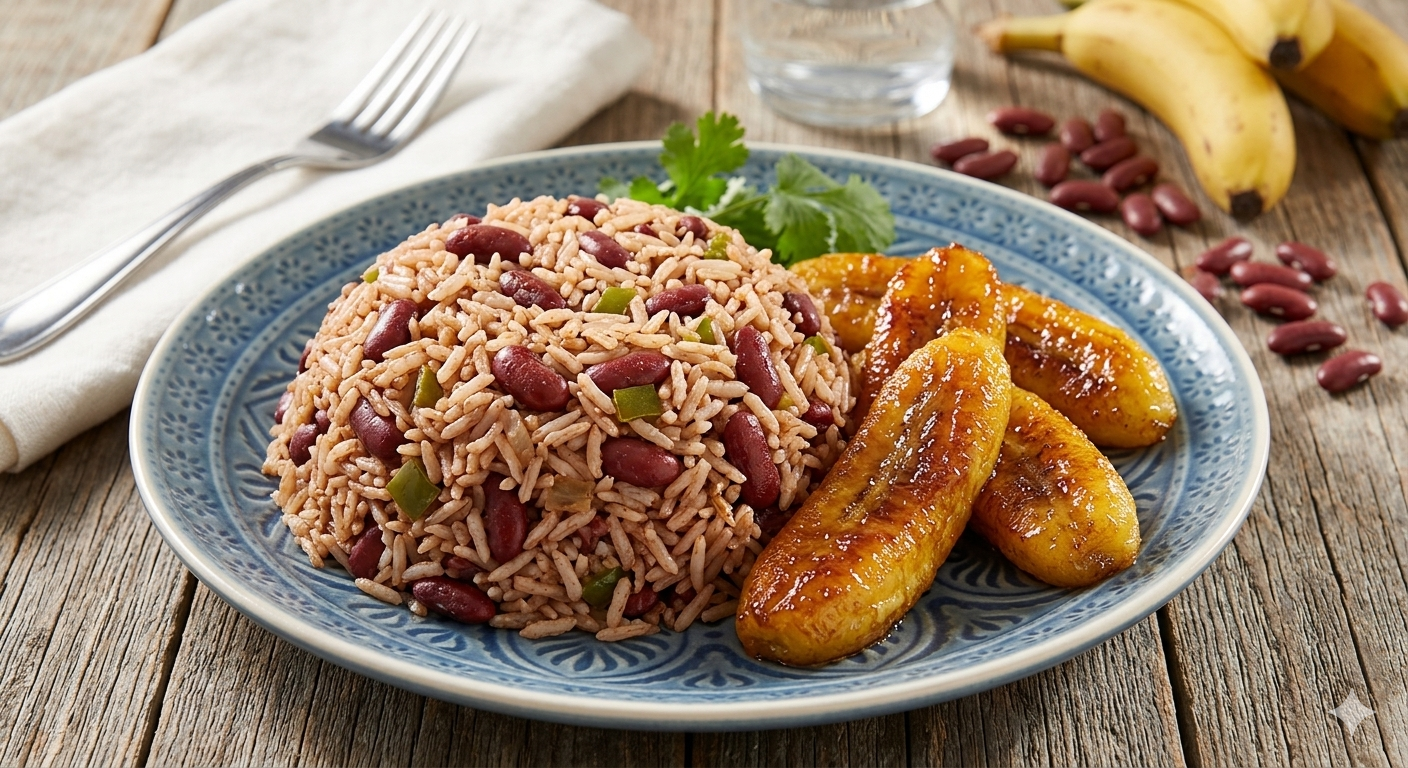
Congrí — Cuban red beans and rice cooked together

Recipe No. 4

Congri (Red Beans & Rice)

Black beans are Moros. Red kidney beans are Congri. Both are sacred. Congri comes from the eastern provinces of Cuba — Oriente, where the dish crossed over from Haiti and took root. The rice and red beans cook together, absorbing the smoky fat from salt pork and the deep flavors of the sofrito. It is a complete meal on its own and a masterpiece alongside anything else.

Prep Time

10 min

Cook Time

1 hour

Serves

6

Difficulty

Easy

Ingredients

  • 2 cups long-grain white rice
  • 1 can (15 oz) red kidney beans, drained (reserve liquid)
  • 1 large onion, finely diced
  • 1 green bell pepper, finely diced
  • 4 garlic cloves, minced
  • ¼ lb salt pork or thick-cut bacon, diced
  • 1 bay leaf
  • 1 tsp ground cumin
  • 1 tsp dried oregano
  • 2 tbsp olive oil
  • 2¾ cups water or chicken broth
  • Salt to taste
  • 1 tsp sugar (optional, balances the beans)

Instructions

  1. 1

    Render the pork fat: In a large, heavy-bottomed pot over medium heat, add the diced salt pork or bacon. Cook, stirring frequently, for 5–7 minutes until the fat has rendered and the pieces are golden and crispy. Do not drain — that fat is flavor.

  2. 2

    Build the sofrito: Add olive oil to the rendered fat. Add the diced onion and green pepper. Cook for 6–8 minutes, stirring, until soft and starting to caramelize. Add the minced garlic and cook 2 more minutes. Add cumin and oregano, stir and cook 1 minute.

  3. 3

    Add rice and beans: Add the drained rice to the pot and stir to coat every grain in the sofrito and fat. Toast the rice for 2–3 minutes, stirring constantly. Add the drained kidney beans and the bay leaf.

  4. 4

    Add liquid and cook: Pour in the water or broth plus a splash of the reserved bean liquid for color and flavor. Season with salt. Bring to a boil, stir once, then reduce heat to the lowest setting. Cover tightly and cook for 20 minutes. Do not lift the lid.

  5. 5

    Rest and fluff: After 20 minutes, remove from heat and let rest, still covered, for 10 minutes. Remove the lid, discard the bay leaf, and use a fork to gently fluff the rice. The grains should be separate, each one lightly tinted from the beans and sofrito.

🍚

Chef's Tip

"The salt pork fat is non-negotiable for authentic flavor. If you only have bacon, use it — but use thick-cut. And always use the bean liquid to add color. Congri should be a deep, reddish-beige, not white rice with beans dropped on top. The two should be cooked together, not served side by side."

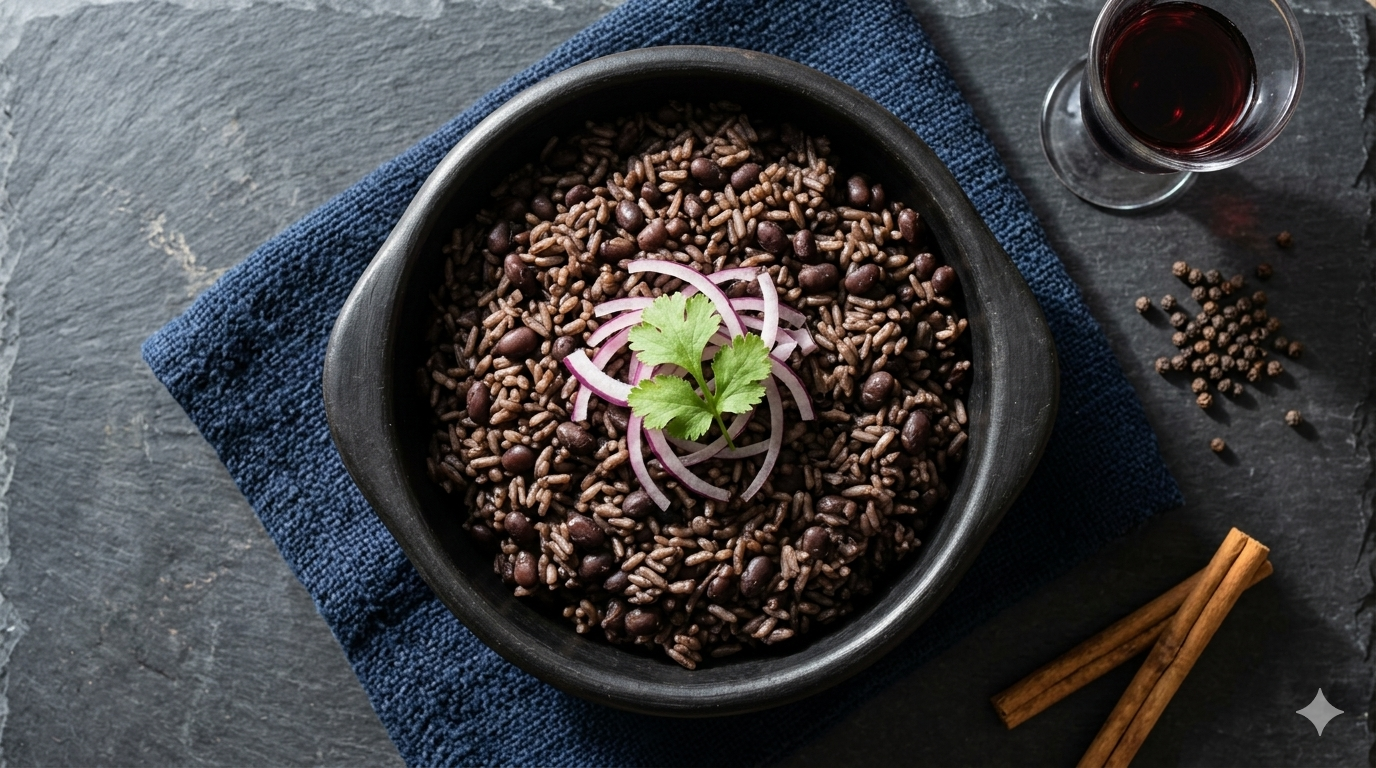
Moros y Cristianos — black beans and white rice, a Cuban staple

Recipe No. 5

Arroz Moro (Moros)

"We call it Moros. Not 'Moros y Cristianos' — just Moros. The black beans and white rice cooked together until the rice turns dark and fragrant and savory in a way that neither ingredient could achieve alone." If Congri belongs to the east, Moros belongs to Havana, to western Cuba, to the memory of every plate of food ever eaten in a paladar with a cold Malta on the side.

Prep Time

15 min

Cook Time

45 min

Serves

6

Difficulty

Easy

Ingredients

  • 2 cups long-grain white rice
  • 1 can (15 oz) black beans, drained (reserve all liquid)
  • 1 large onion, finely diced
  • 1 green bell pepper, finely diced
  • 4 garlic cloves, minced
  • 3 tbsp olive oil
  • ¼ lb salt pork or chorizo, diced
  • 1 bay leaf
  • 1 tsp ground cumin
  • ½ tsp dried oregano
  • 1 tsp apple cider vinegar
  • Salt to taste
  • 2½ cups water (adjust with bean liquid)

Instructions

  1. 1

    Prep the beans: Drain the black beans, but reserve every drop of the liquid — it's dark and full of flavor and will color the rice beautifully. If using canned beans, add 1 tsp of apple cider vinegar to the bean liquid to brighten the flavor.

  2. 2

    Cook the salt pork: In a large heavy pot over medium heat, cook the diced salt pork or chorizo until golden and the fat is rendered, about 5 minutes. The chorizo version is slightly smokier and richer — use it if available.

  3. 3

    Sofrito: Add olive oil, then the onion and green pepper. Cook for 7–8 minutes. Add garlic and cook 2 more minutes. Add cumin, oregano, and the bay leaf. Stir and cook 1 minute more until the spices are fragrant.

  4. 4

    Rice and beans: Add the rice to the sofrito and stir to coat. Toast 2 minutes. Measure the reserved bean liquid and add enough water to equal 2½ cups of total liquid. Pour over the rice. Add the black beans. Season with salt. Stir once.

  5. 5

    Cook and rest: Bring to a boil. Stir once more, reduce heat to lowest setting, cover tightly, and cook for 18–20 minutes. Remove from heat without lifting the lid and rest 10 minutes. Fluff with a fork. The rice should be deep charcoal-brown and fragrant, every grain intact.

🖤

Chef's Tip

"The color is everything. If your Moros looks like white rice with beans, something went wrong. Add more of the bean liquid. The rice should be dark — nearly black in the best versions. And always use long-grain rice. Short grain will get mushy. The goal is grains that stay separate while absorbing every bit of that black bean flavor."

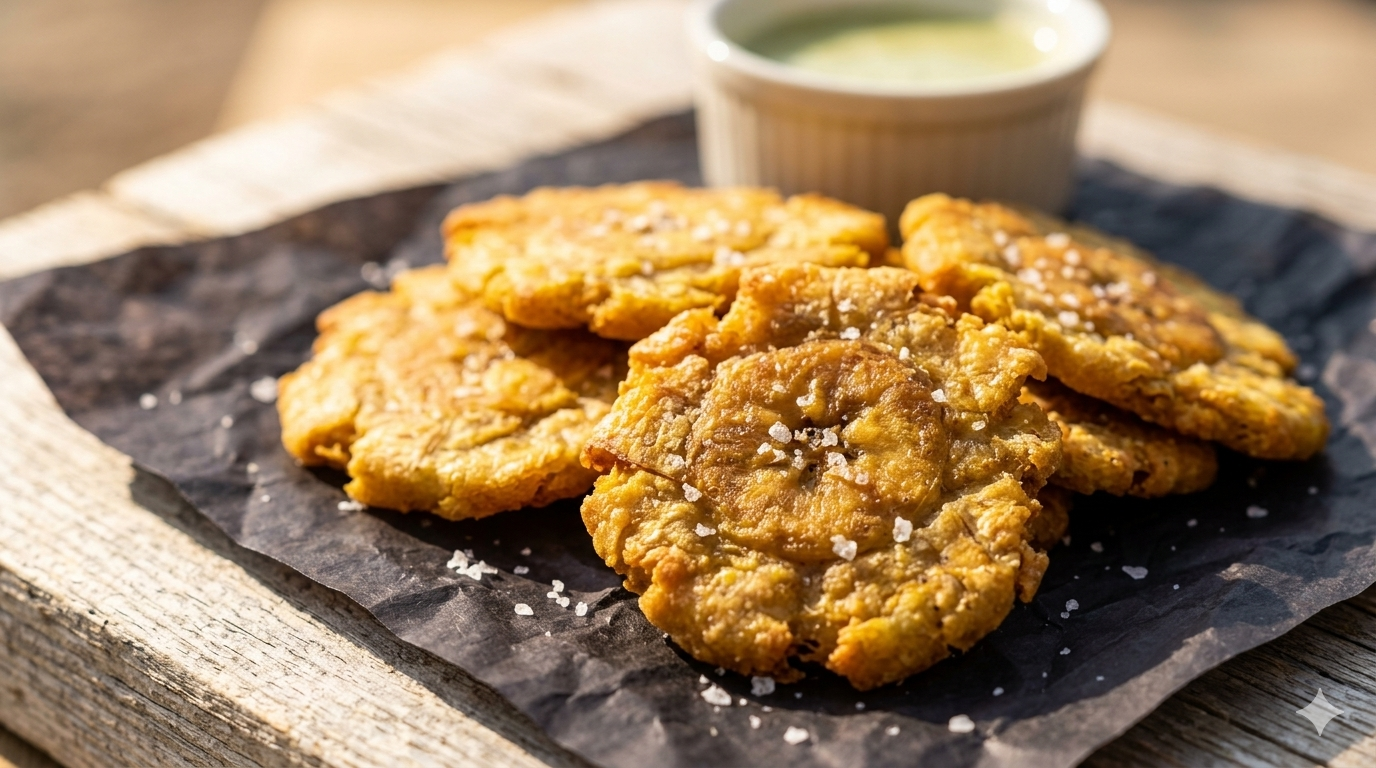
Tostones — twice-fried green plantains, crispy Cuban side dish

Recipe No. 6

Tostones

Twice-fried green plantains. The Cuban chip. They show up at every party, every family meal, alongside every plate of rice and beans. The magic is in the double fry: the first softens the plantain so you can flatten it, the second crisps it into golden, salty perfection. A tostonera — the little wooden press — is the traditional tool, but the bottom of a glass jar works just as well.

Prep Time

5 min

Cook Time

15 min

Serves

4

Difficulty

Easy

Ingredients

  • 2 green plantains (firm, no yellow)
  • Vegetable or canola oil for frying (2 inches deep)
  • Kosher salt
  • Garlic salt (optional, highly recommended)
  • Cold salted water for soaking (optional)
  • Mojo dipping sauce for serving (optional)

Instructions

  1. 1

    Peel and slice: Cut the ends off the green plantains. Score the skin lengthwise and peel it away — green plantain skin is tough; use the tip of a knife to help. Slice the plantains crosswise into 1-inch thick rounds.

  2. 2

    First fry: Heat oil in a heavy-bottomed pan or cast iron skillet to 325°F (165°C). Fry the plantain rounds in batches for 3–4 minutes per side until they turn pale gold and are cooked through. They should be soft, not crispy. Remove and drain on a paper towel.

  3. 3

    Smash: While still warm, place each fried round between two sheets of plastic wrap (or in a folded paper towel) and press flat using a tostonera, the bottom of a heavy glass, or the flat of a pan. Smash to about ¼ inch thickness. Flat and even is the goal.

  4. 4

    Second fry: Increase oil temperature to 375°F (190°C). Return the smashed rounds to the oil and fry for 2–3 minutes per side until deeply golden and crispy on the edges. The second fry is where the magic happens.

  5. 5

    Season immediately: Remove tostones from the oil and season immediately with kosher salt and garlic salt while still hot. Eat right away — tostones wait for no one. Serve with mojo dipping sauce if desired.

🌿

Chef's Tip

"Always twice. Never once. The first fry softens them, the second makes them golden and crispy. Use green plantains — not yellow, not spotted. Yellow plantains become maduros (sweet), which are a different and equally wonderful dish. Green is starchy, savory, and made for this. And season them the second they come out of the oil."

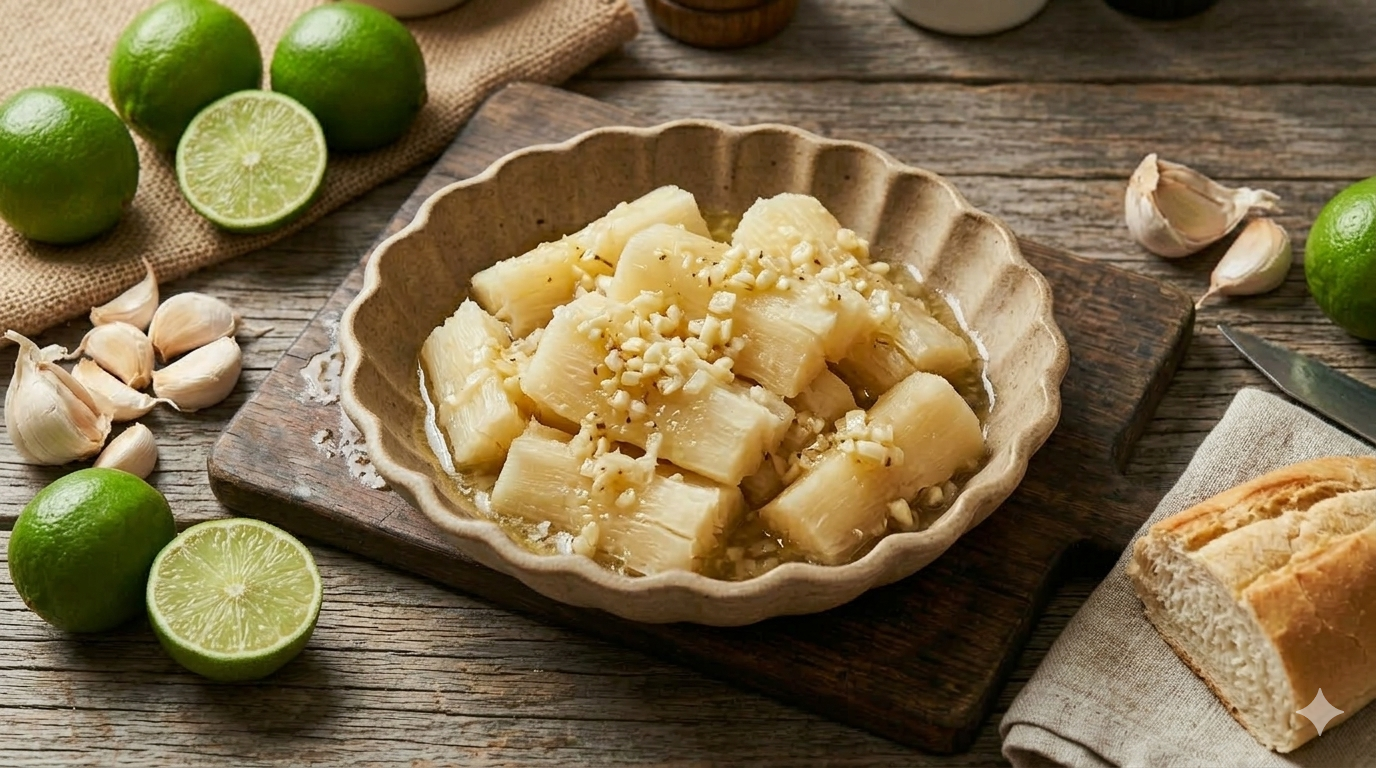
Yuca con mojo — cassava with garlic-citrus Cuban sauce

Recipe No. 7

Yuca con Mojo

Boiled cassava drowned in garlic-citrus mojo. One of the most elemental dishes in Cuban cooking — simple ingredients, extraordinary result. The starchy, creamy yuca absorbs the sharp, golden garlic mojo poured over it hot, sizzling as it hits. The sound of that sizzle is the sound of Cuba. No meal at Noche Buena is complete without it.

Prep Time

10 min

Cook Time

30 min

Serves

4

Difficulty

Easy

Ingredients

  • 2 lbs yuca (fresh or frozen, peeled and cut into chunks)
  • 1 tbsp salt (for boiling water)
  • For the Mojo:
  • ½ cup extra-virgin olive oil
  • 8 garlic cloves, thinly sliced or smashed
  • ½ cup naranja agria (or 1/3 cup OJ + 2 tbsp lime juice)
  • 1 tsp ground cumin
  • 1 tsp kosher salt
  • ½ tsp black pepper
  • Fresh cilantro or flat-leaf parsley, chopped
  • 1 small onion, thinly sliced into rings (optional)

Instructions

  1. 1

    Prepare the yuca: If using fresh yuca, peel with a sturdy knife (the skin is thick and waxy), cut into 3-inch chunks, and remove the fibrous central cord. If using frozen, thaw under cold water. Place in a large pot, cover with cold salted water, and bring to a boil.

  2. 2

    Boil until tender: Cook the yuca at a rolling boil for 20–25 minutes until completely tender when pierced with a fork — it should yield easily, like a well-cooked potato. Drain well and arrange on a serving platter. Keep warm.

  3. 3

    Make the mojo: In a small saucepan, heat the olive oil over medium heat. Add the sliced garlic and cook, stirring frequently, for 3–4 minutes until the garlic is golden and fragrant but not burned. Remove from heat immediately when golden.

  4. 4

    Add the citrus — carefully: Standing back slightly, pour the naranja agria into the hot garlic oil. It will sizzle and splatter dramatically. That's exactly right. Add cumin, salt, and pepper. Stir quickly and return to low heat for 30 seconds. Add the onion rings if using.

  5. 5

    Pour and serve: Pour the hot mojo directly over the drained yuca on the platter. It should sizzle as it hits. Scatter fresh cilantro over the top. Serve immediately — yuca waits for no one. Eat alongside lechón or as a standalone course.

🧄

Chef's Tip

"The mojo must be hot when it hits the yuca. That sizzle is not just theatrical — the heat opens up the starch in the yuca so it absorbs the mojo properly. Cold mojo on cold yuca is just sad. Make the yuca, make the mojo, pour it immediately. Frozen yuca from the Latin grocery works beautifully and is much easier to prep than fresh."

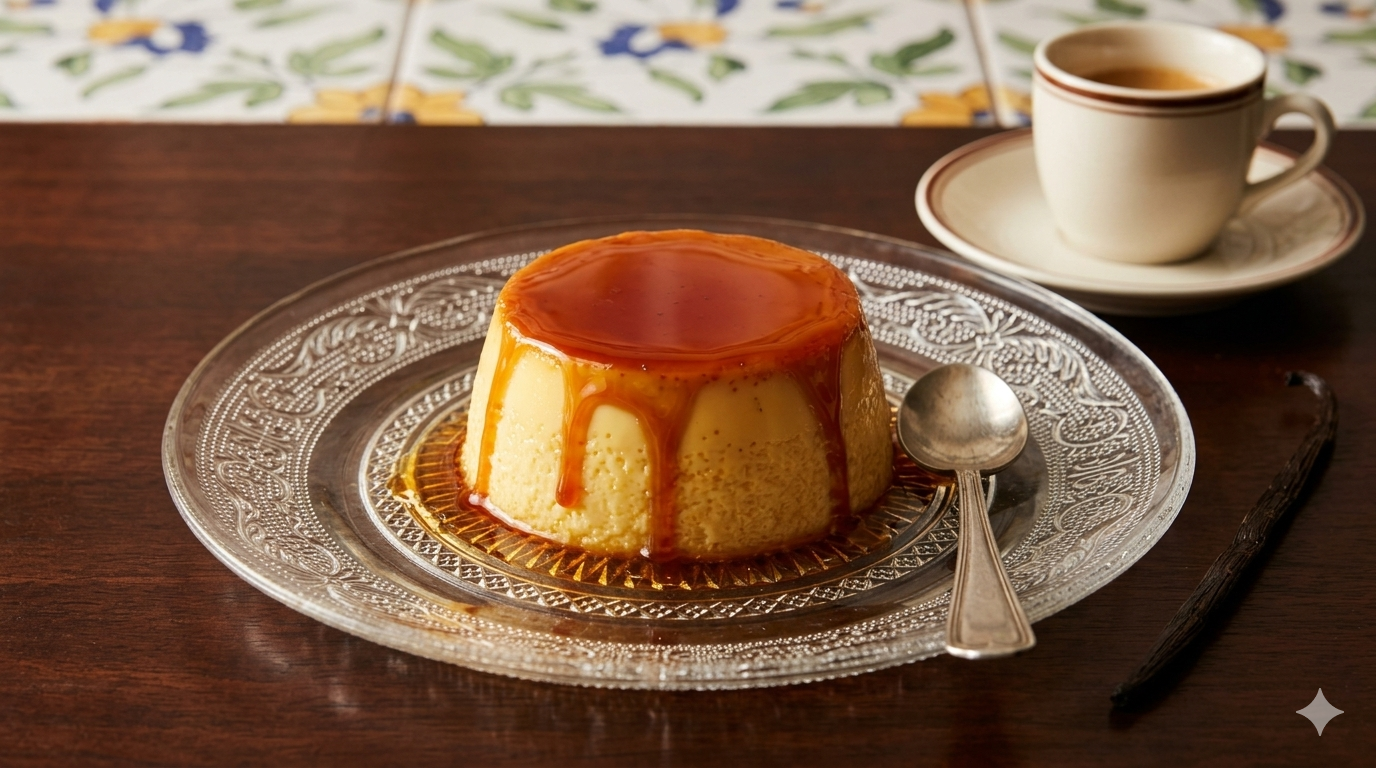
Flan cubano — classic Cuban caramel custard flan

Recipe No. 8

Flan Cubano

The dessert of desserts. Silky, quivering caramel custard that unmolds onto a plate in one perfect motion, the amber caramel cascading down the sides. Cuban flan uses both sweetened condensed milk and evaporated milk — richer and denser than its French cousin, with a depth of sweetness that demands to be eaten slowly. This is the dessert at every birthday, every holiday, every celebration worth remembering.

Prep Time

20 min

Cook Time

1 hour

Chill Time

Overnight

Serves

8

Ingredients

  • 1 cup granulated white sugar (for caramel)
  • 2 tbsp water (for caramel)
  • 4 whole large eggs
  • 2 large egg yolks
  • 1 can (14 oz) sweetened condensed milk
  • 1 can (12 oz) evaporated milk
  • 1 tsp pure vanilla extract
  • Pinch of salt
  • ¼ tsp ground cinnamon (optional)
  • 1 tbsp dark rum (optional — traditional)

Instructions

  1. 1

    Caramelize the sugar: Preheat oven to 325°F (165°C). In a medium saucepan over medium heat, combine sugar and water. Cook without stirring until the sugar melts and turns deep amber — 8–12 minutes. Watch it carefully; it goes from perfect to burned in seconds. Remove from heat the moment it reaches a dark amber color.

  2. 2

    Coat the mold: Immediately pour the hot caramel into a 9-inch round cake pan or a flanera (flan mold). Quickly tilt the pan in all directions to coat the bottom and partway up the sides evenly. Set aside and let the caramel harden — about 5 minutes.

  3. 3

    Make the custard: In a blender, combine the whole eggs, egg yolks, sweetened condensed milk, evaporated milk, vanilla extract, salt, cinnamon (if using), and rum (if using). Blend on low for 30 seconds until smooth and fully combined. Do not over-blend — you don't want bubbles.

  4. 4

    Strain and pour: Strain the custard mixture through a fine-mesh sieve into the prepared caramel-coated pan. This removes any air bubbles and ensures a perfectly silky texture. Cover tightly with aluminum foil.

  5. 5

    Bake in a water bath: Place the flan pan inside a larger roasting pan. Pour hot water into the roasting pan until it comes halfway up the sides of the flan pan. Bake for 55–65 minutes until the edges are set but the center still has a slight jiggle when shaken gently. Remove from oven and water bath.

  6. 6

    Chill overnight and unmold: Let cool to room temperature, then refrigerate uncovered for at least 6 hours — overnight is best. To unmold, run a knife around the edge, place a large plate on top of the pan, and flip quickly and confidently. Let the caramel cascade down. Serve chilled.

🍮

Chef's Tip

"Two rules for perfect flan: Don't rush the caramel — amber, not pale gold, not black. And don't rush the chill — overnight is not optional, it's a requirement. The texture develops as it sets. A flan chilled only 2 hours will be wobbly and loose. After a full night in the refrigerator, it becomes something extraordinary. Be patient. This is Cuba."

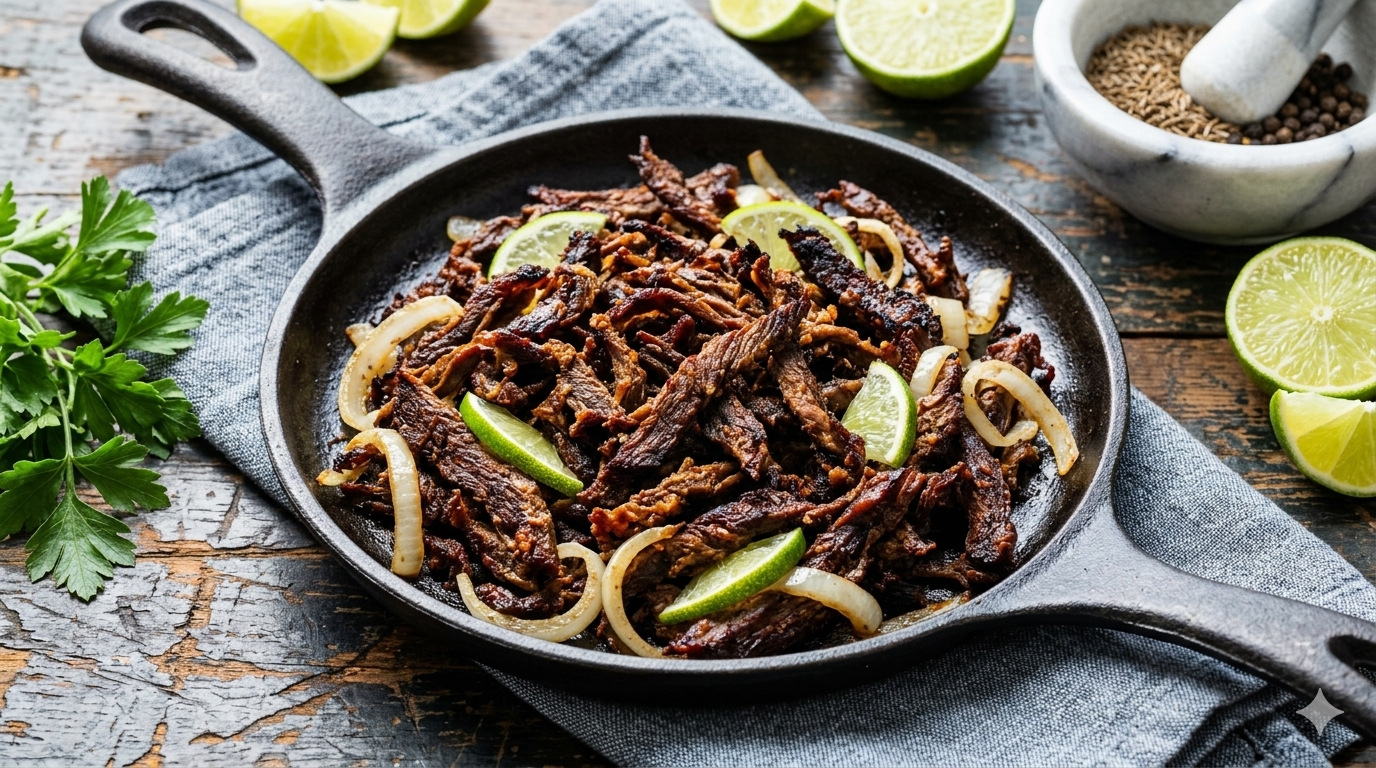
Vaca frita — crispy fried beef with moros and tostones

Recipe No. 9

Vaca Frita

Crispy shredded beef — like ropa vieja's louder, more confident sibling. Where ropa vieja is saucy and braised, vaca frita is pan-fried until the edges are lacy and golden and the whole thing sizzles in the pan. Marinated in mojo, then crisped hard in a hot skillet. Topped with rings of caramelized onion. This might be the best beef dish Cuba has ever produced.

Prep Time

10 min

Marinate

1–2 hrs

Cook Time

2.5 hrs

Serves

4

Ingredients

  • 1.5 lbs flank steak
  • ½ cup naranja agria (or OJ + lime mix)
  • 6 garlic cloves, minced to a paste
  • 1 tsp ground cumin
  • 1 tsp dried oregano
  • 1 tsp kosher salt
  • ½ tsp black pepper
  • 3 tbsp vegetable oil (for frying)
  • 1 tbsp olive oil
  • 1 large onion, sliced into thin rings
  • Fresh lime wedges for serving
  • Fresh parsley, to garnish

Instructions

  1. 1

    Boil and shred the beef: Place flank steak in a pot, cover with water, add salt and a few garlic cloves. Bring to a boil, reduce heat, and simmer covered for 1.5–2 hours until the beef is completely tender. Drain and let cool. Shred into long, thin strands with two forks — against the grain for the most tender result.

  2. 2

    Marinate in mojo: In a bowl, whisk together the naranja agria, garlic paste, cumin, oregano, salt, pepper, and olive oil. Add the shredded beef and toss to coat thoroughly. Let marinate for at least 1 hour at room temperature, or up to 4 hours in the refrigerator.

  3. 3

    Caramelize the onions: In a large skillet over medium heat, add 1 tbsp vegetable oil. Add the sliced onion rings and cook, stirring occasionally, for 12–15 minutes until deep golden and caramelized. Season with a pinch of salt. Remove and set aside.

  4. 4

    Fry the beef: Increase heat to medium-high. Add the remaining 2 tbsp vegetable oil. Add the marinated shredded beef in a single, even layer — resist the urge to stir. Let it fry undisturbed for 3–4 minutes until a crispy, golden crust forms on the bottom. Then stir and let the other side crisp, 2–3 minutes more.

  5. 5

    Top and serve: Pile the caramelized onions over the crispy beef in the pan. Squeeze fresh lime juice over everything. Serve immediately over white rice with a scoop of black beans and tostones. Scatter fresh parsley over the top.

🔥

Chef's Tip

"The biggest mistake people make with vaca frita is stirring too much. You need to let it sit. The crispy edges form from heat + patience — constant stirring makes it steamy instead of crispy. Get the pan hot, lay it in, and leave it alone for at least 3 minutes. You'll know it's ready when you can hear it crackling and see golden edges forming."

Arroz con leche — Cuban rice pudding with cinnamon

Recipe No. 10

Arroz con Leche

Cuban rice pudding. Sweet, cinnamon-kissed, made by abuelas everywhere and passed down without a written recipe for generations. Not Arroz con Dulce — that's a Puerto Rican cousin — just Arroz con Leche: short-grain rice, whole milk, sugar, a cinnamon stick, a curl of lemon peel, stirred patiently until it becomes a thick, creamy, perfumed porridge that is pure comfort. This is the last thing you eat before bed, the first thing you crave when you're far from home.

Prep Time

5 min

Cook Time

45 min

Serves

6

Difficulty

Easy

Ingredients

  • 1 cup short-grain white rice (Arborio works well)
  • 2 cups water
  • 4 cups whole milk (more as needed)
  • 1 cup granulated white sugar
  • 1 cinnamon stick
  • Zest of 1 lemon (peeled in long strips)
  • 1 tsp pure vanilla extract
  • Pinch of salt
  • Ground cinnamon, for garnish
  • 1 tbsp butter (optional, for richness)

Instructions

  1. 1

    Par-cook the rice: In a medium saucepan, combine rice and 2 cups water with a pinch of salt. Bring to a boil, then reduce heat to low. Cover and cook for 10 minutes — the rice will be partially cooked and the water mostly absorbed. This gives the starch a head start.

  2. 2

    Add the milk and aromatics: Pour in the whole milk, add the cinnamon stick and the lemon peel strips. Increase heat to medium and bring to a gentle simmer, stirring frequently. Do not let it boil hard — it will stick and scorch. Patience is the whole point of this recipe.

  3. 3

    Stir and stir: Cook over medium-low heat for 25–30 minutes, stirring almost constantly with a wooden spoon. The milk will gradually absorb into the rice and the mixture will thicken. If it gets too thick before the rice is fully tender, add more warm milk, ¼ cup at a time.

  4. 4

    Add sugar and vanilla: When the rice is completely tender and the mixture is thick and creamy — like a loose risotto — add the sugar, vanilla extract, and butter if using. Stir vigorously to dissolve the sugar completely. Cook 3–5 more minutes. Remove the cinnamon stick and lemon peel strips.

  5. 5

    Serve warm or chilled: Ladle into bowls or ramekins. Dust generously with ground cinnamon. Serve warm for maximum coziness, or cover and refrigerate for 2+ hours for a cold, denser version. Both are correct. Both are wonderful. Both are Cuba.

🍮

Chef's Tip

"Short-grain rice is key — it releases starch as it cooks, which is what gives arroz con leche its creaminess. Long-grain will be grainier and never get creamy the way it should. Add sugar at the end, not the beginning — sugar added early makes the milk curdle. And stir constantly; this is a recipe for when you want to stand in the kitchen and just cook something with your hands."

Ready to explore Cuba in person? Our first-timer's guide to visiting Cuba covers everything you need.