The Real Cuba
Go to the Market First
If you want to understand what Cubans actually eat - not what gets put in front of tourists - go to the market. The agromercado at dawn, when the produce is fresh, the vendors are setting up, and the smells of ripe mango and fresh herbs hit you before you even see the stalls. This is where Cuban families start their day. This is where cooks decide what's for dinner. The ration book says one thing; the market tells you the truth about what's actually available, what's fresh, what's in season.
Havana's food markets are a universe unto themselves. Some are sprawling covered halls with hundreds of vendors. Some are single tables at an intersection, a tarp stretched overhead, a crate of avocados and a handwritten price on a piece of cardboard. All of them will tell you more about Cuban daily life than any museum or guided tour. This guide covers the main markets - where they are, what they sell, and how to find your way through them like a local.
"The market smells of ripe guava and cigarette smoke, of raw pork and overripe plantains - and somehow it all smells like Cuba."
Market Profiles
The Markets of Havana
Mercado de Cuatro Caminos (Mercado Único)
🏚️ Centro HabanaHavana's largest and most famous market, built where four streets converge in Centro Habana - hence the name. Step inside the old covered market hall and you're assaulted by noise, motion, and every scent imaginable: raw pork hanging from iron hooks, mountains of malanga, bins of dried beans, and vendors shouting prices over each other. Cuatro Caminos operates on controlled chaos - it's hectic, it's authentic, and it is absolutely not for the faint of heart. But it's the most complete picture of what Havanans actually eat, in one place. Arrive before 9am for the freshest produce. find your way through the pork section with confidence and a strong stomach. This is the real thing.
Agromercados (Agro-Markets)
🌿 Neighborhood-wideScattered across every Havana neighborhood, the agromercados are the everyday market that every Cuban housewife and cook relies on. State-run but vibrantly alive, these open-air produce markets are where fresh fruits, vegetables, and herbs appear each morning. The selection varies wildly - one day, a mountain of papayas; another day, nothing but plantains. That uncertainty is part of the rhythm. Regulars know which vendors get the best tomatoes, who saves the culantro under the counter for their best customers. If you want to shop like a local, find your nearest agromercado, go early, bring exact change, and just point at whatever looks best.
Mercado de Artesanía (El Almacén)
☕ Artisan GoodsLess a produce market and more a purveyor of Cuba's pantry staples and artisan food products. El Almacén is where you find preserved goods, dried beans of every variety, quality Cuban coffee (tueste criollo, the dark roasted blend that Cubans live on), and bottles of rum ranging from the everyday to the collector's item. There are spice vendors here who'll weigh out cumin and oregano and pepper in brown paper twists. For anyone cooking Cuban food at home - or anyone who wants to bring back something more interesting than airport rum - this is the market to linger in.
Mercado del Vedado
🏡 VedadoVedado's market reflects its neighborhood: a calmer, more orderly experience than the chaos of Cuatro Caminos. Serving Havana's more affluent and intellectual district - home to artists, professors, and Cuba's professional class - the Vedado market tends to have cleaner stalls, slightly better organization, and occasionally a wider range of specialty produce. Don't mistake calmer for less authentic. The conversations are just as lively, the prices are negotiated with the same seriousness, and the vendors know their regulars by name. A good starting point if the sensory overload of Cuatro Caminos feels too intense on your first day.
Placitas - The Informal Street Stalls
🍌 Street cornersThe placitas are the most informal layer of Havana's food economy. They appear at intersections, under trees, on the corners of residential blocks - a folding table, a crate, and whatever produce the vendor managed to source that morning. Plantains green and ripe. Avocados that need one more day. Tomatoes piled high, just a little overripe, perfect for sofrito. Buying from a placita is pure transactional Havana: you point, they name a price, you hand over pesos. No menu, no signage, no ceremony. The placitas fill in the gaps between agromercados, and they're often the freshest option in your immediate neighborhood, sourced from nearby urban gardens or the vendor's own plot.
Shopping Guide
What to Buy at a Cuban Market
The Cuban pantry is built around a handful of essential ingredients that you simply can't find outside the island in their full, authentic form. If you're cooking Cuban food - or just eating it - these are the things worth hunting for at the market.
Before You Go
Market Etiquette
Cuban markets have their own rhythms and unwritten rules. Follow them and you'll have a smooth experience - and likely get treated better by vendors who recognize a respectful visitor.
-
Go Early The best produce goes to the first customers. Arrive before 9am if you can - before 8am at Cuatro Caminos. Late arrivals get the picked-over remnants and the wilted herbs.
-
Bring Your Own Bag Plastic bags exist but are thin and unreliable. Bring a sturdy tote or a net shopping bag. You'll be carrying produce across uneven sidewalks in heat - plan accordingly.
-
Cash Only, Small Bills Markets operate entirely in Cuban pesos (CUP). No cards. No USD. Bring small bills - vendors rarely have change for large notes, and counting out change slows everyone down.
-
Negotiate Respectfully Gentle bargaining is part of the culture, but aggressive haggling is not. A friendly smile and basic Spanish go much further than demanding discounts. Vendors set prices that keep them alive - respect that.
-
Ask Before Photographing Markets are photogenic. Vendors are human beings at work. Always ask before pointing a camera at a person. Many will say yes enthusiastically. Some will prefer not. Respect both answers.
A Story
A Morning at Cuatro Caminos
You smell it before you see it. The market announces itself a block away - a thick, warm cloud of green herb and raw meat and something faintly fermented, like the breath of a city's kitchen exhaled all at once. The covered hall of Cuatro Caminos rises above the intersection, its old iron and concrete frame patched and re-patched over decades, vendors having claimed every inch of space inside and spilling out onto the surrounding sidewalks.
Inside: controlled pandemonium. Pork hangs from hooks, pink and glistening in the morning light. A woman in a yellow dress navigates the crowd with impossible confidence, a shopping bag in each hand, exchanging rapid-fire opinions about tomato quality with a vendor who's simultaneously making change for three other customers. An old man in a guayabera sorts through a crate of ají cachucha with the focused patience of a jeweler appraising stones.
The produce section is its own color-field painting. Green mountains of plátano. Orange papayas the size of footballs. Boniato in varying shades of cream and purple. Malanga in rough brown mounds. Somewhere deeper in, the fish section - less attended this early, the smell announcing it diplomatically before you arrive. You buy a pound of recao from a small woman who wraps it in newspaper with practiced efficiency, a pound of ají cachucha from a man who throws in an extra handful "para que cocines bien, mi amor" - so you cook well, my love. You walk out with both bags full and your Spanish twice as confident as when you walked in. The same produce you'll see at the market ends up beautifully prepared at Old Havana's neighborhood restaurants.
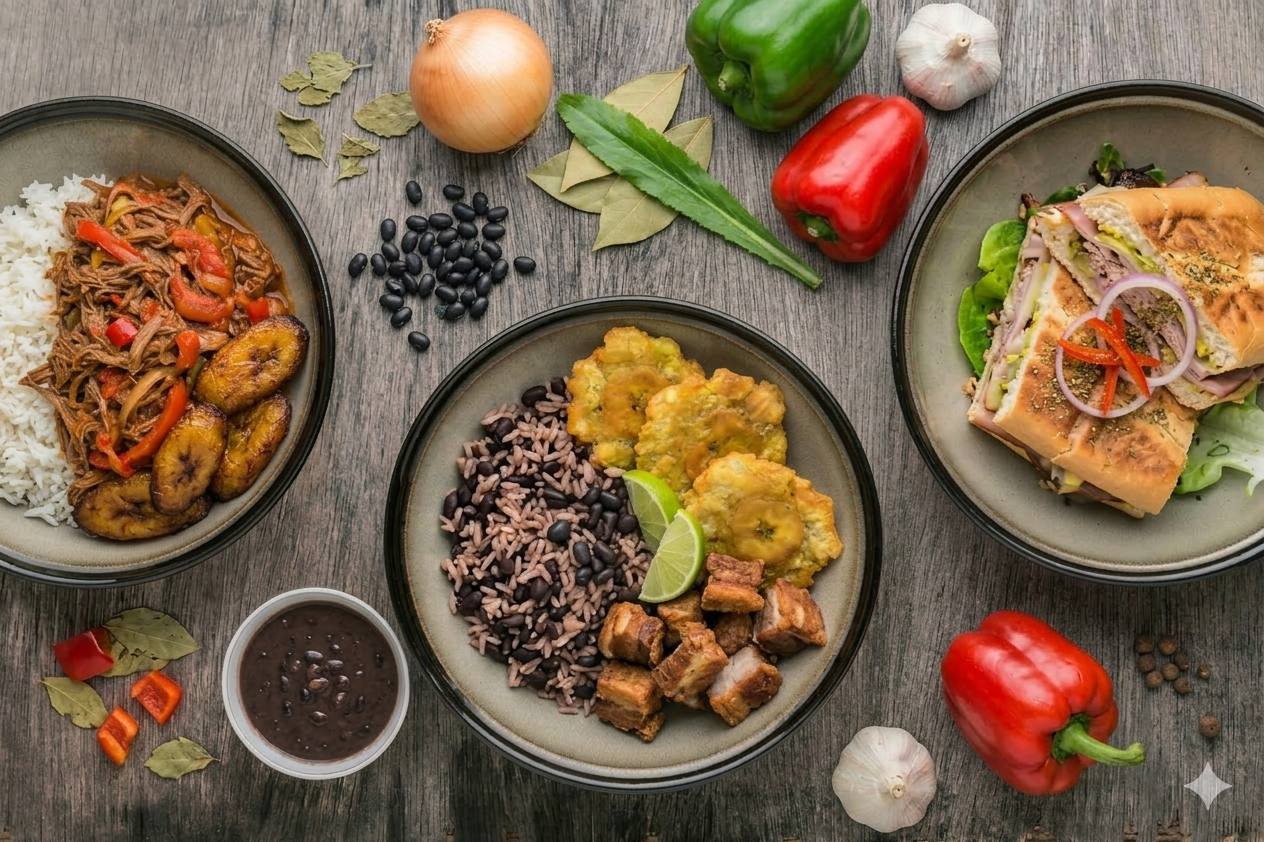
From market to kitchen - the freshest Cuban produce makes the simplest food extraordinary. Our Cuba connectivity guide has tips for navigating the city even when Wi-Fi is sparse.